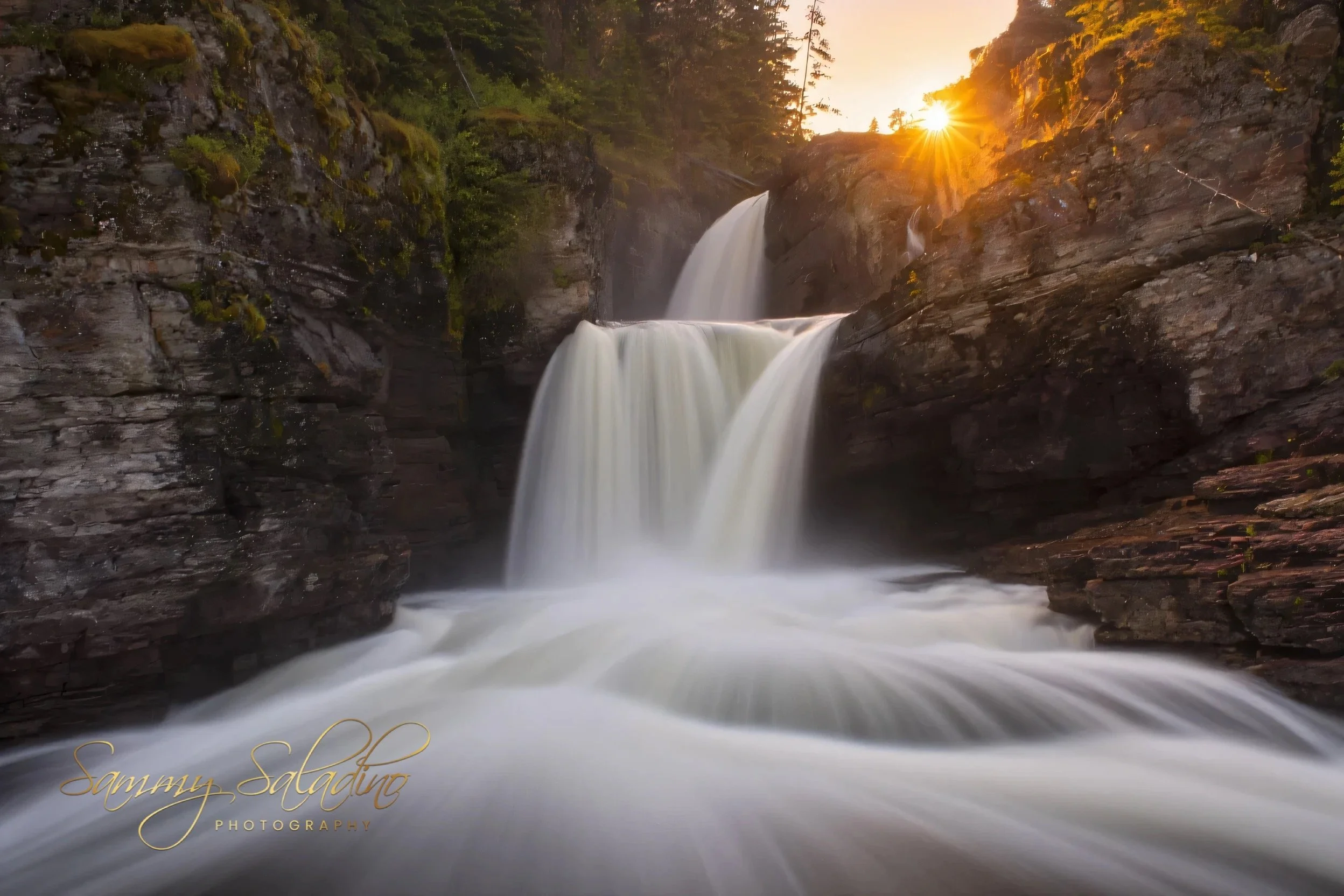
Glacier National Park
The air was so thick with spray it tasted like granite and clean snow melt. I stood precariously on a slick, mossy boulder, my tripod legs splayed wide against the current, knowing this was a foolish place to be, but unable to retreat. The sound of the waterfall—a double-barreled rush of white fury—was so loud it felt less like a noise and more like a vibration in my chest.
I’d hiked since before dawn to beat the crowds, chasing the perfect alignment, and the mountain finally delivered. Just as I settled the camera, the rising sun—which had been hidden behind the towering rock of the gorge—found the single, narrow canyon opening. It wasn't just light; it was a flare.
A perfect starburst of gold erupted from the upper right, slicing through the spray. This light didn't illuminate; it sanctified. It turned the mist hovering over the plunge pool into a halo and painted the wet, dark rock walls in hues of emerald and copper. The water itself, caught in the long exposure, looked like silk or liquid glass, a contradiction of its own violent speed.
I watched the light grow, holding my breath against the tremor of the falls. I’d come to Glacier seeking something grand and ancient, and here it was: the mountain and the water locked in an eternal, deafening battle, with the morning sun acting as a witness. It was overwhelming, humbling, and utterly beautiful. I didn't just take the picture; for that single, perfect minute, I felt like I was part of the flow, an insignificant, yet perfectly placed, piece of the wild.